Fertiliser market, trade to recover far slower than prices if Iran war ends – analyst

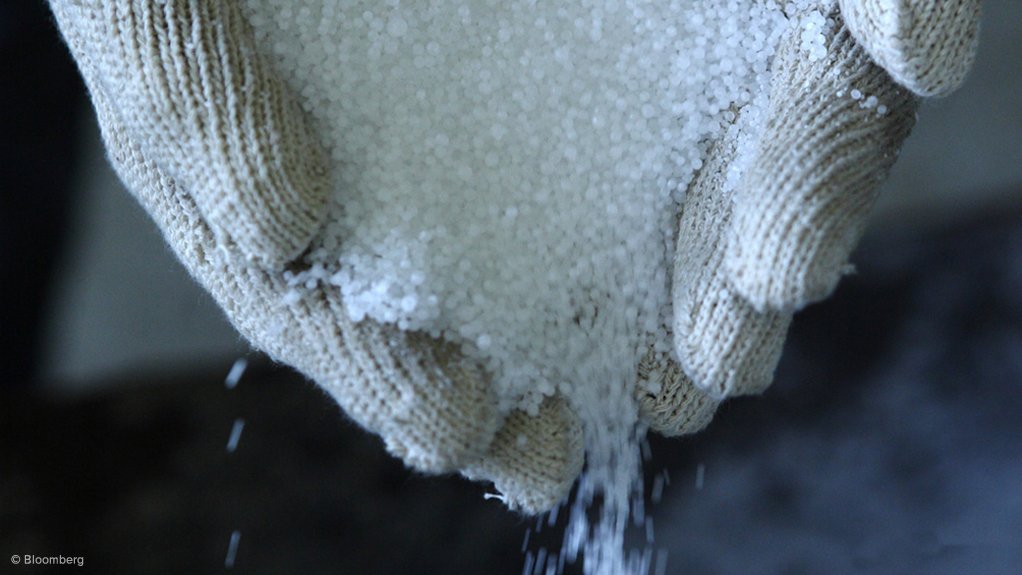



Independent Commodity Intelligence Services fertiliser analyst Chris Vlachopoulos has warned that the global fertiliser market faces disruption to supply chains and costs on an unprecedented scale.
He expects pressures in the fertiliser market to persist even if the Strait of Hormuz reopens and the Iran conflict is resolved swiftly.
While fertiliser import prices may respond relatively quickly as geopolitical risk premiums linked to freight and insurance unwind, market participants caution that this would be unlikely to translate into a full normalisation of the value chain for a considerable time, Vlachopoulos explained.
He cited market participants emphasising that price reactions and logistical returns to normal could operate on different timelines. Relief for farmers, in particular, could be significantly delayed, as grain prices remain unfavourable compared with the time of the Ukraine conflict.
Vlachopoulos also quoted a source stating that they expect a return to normality could occur within a month or two after the conflict ends. The source added that buyers could expect a price correction of between $100/t to $200/t, but this may take some time.
Others were much more cautious in their timeline estimates, expecting at least a year before fertiliser markets normalise.
Some suggested that even if the conflict were to end immediately, disruptions to global fertiliser trade flows could continue until the end of this year and possibly even into the first quarter of 2027.
While views differed widely on how long full normalisation would take, most participants agreed that logistics, production restarts and trade flows would recover far slower than prices.
Physical supply chains are expected to take considerable time to normalise, particularly for phosphates, where global availability was already tight before the latest Middle East conflict.
Iranian fertiliser exports would not fully resume overnight, while shipping, insurance and banking transaction constraints could linger even after a formal reopening of the Strait of Hormuz.
Simultaneously, sulphur volumes for fertiliser use are being outbid by other industrial sectors, reinforcing a two-tiered market and limiting production.
Among fertiliser products, phosphates are a particular concern. Prices for diammonium phosphate and monoammonium phosphate had not fully returned to pre-Ukraine conflict levels before the current Middle East disruption, largely owing to structurally tighter supply.
While nitrogen markets may respond more quickly if gas prices stabilise, participants cautioned that full gas supply normalisation could still take some time.
“Right now, the big difficulty is ammonia and sulphur,” a market participant said, adding that some ammonia plants in the region were damaged, raising questions over restart timelines.
An Asia-based source stated that they expected fertiliser markets to normalise in four to six months, but full gas supply may only return in two to three years, which was a "bad situation" for South Asia.
Urea prices in particular could ease in the second and third quarters if the conflict de-escalates but are still expected to remain above 2025 averages owing to lost volumes and elevated financing and insurance costs.
Vlachopoulos said any collapse in negotiations would swiftly tighten urea, ammonia and sulphur supply, which would trigger renewed price spikes.
While the Ukraine conflict was an unprecedented shock for fertiliser markets, markets today are more conditioned to supply disruptions and may adapt faster from a logistics perspective.
However, comparisons have limits. A UK-based source said that, at the time of the outbreak of the Ukraine conflict, farmers could justify spending big money on nitrogen, as they were getting much better prices on grain.
They added that Ukraine and Russia are key players in global grain markets, which led to an immediate price reaction during that conflict.
“The big problem the whole industry has right now is that grain values haven’t really moved up much at all.”
An EU-based source commented that, the situation would in all likelihood normalise a bit faster compared with the onset of the Ukraine conflict, but, owing to high prices farmers paid during the main application time, their financial situation was very critical.
Vlachopoulos also cited farmers noting that they had limited expectations for improved grain prices.
Some market participants suggested that farmer decision-making would be even more critical in the aftermath of the Iran conflict. This included choices around crops, fertiliser types, application timing, or even skipping application altogether.
“The cost of no money is better than losing more money,” one participant concluded.
Article Enquiry
Email Article
Save Article
Feedback
To advertise email advertising@creamermedia.co.za or click here
Research Reports

Projects

Latest Multimedia

Latest News


Showroom

ALBIS FLANGES — founded in 1965 — is a petro-chemical approved manufacturer of flanges and fittings in most grades of steel, listed with Sasol,...
VISIT SHOWROOM



Press Office
Announcements
What's On
Subscribe to improve your user experience...
Option 1 (equivalent of R125 a month):
Receive a weekly copy of Creamer Media's Engineering News & Mining Weekly magazine
(print copy for those in South Africa and e-magazine for those outside of South Africa)
Receive daily email newsletters
Access to full search results
Access archive of magazine back copies
Access to Projects in Progress
Access to ONE Research Report of your choice in PDF format
Option 2 (equivalent of R375 a month):
All benefits from Option 1
PLUS
Access to Creamer Media's Research Channel Africa for ALL Research Reports, in PDF format, on various industrial and mining sectors
including Electricity; Water; Energy Transition; Hydrogen; Roads, Rail and Ports; Coal; Gold; Platinum; Battery Metals; etc.
Already a subscriber?
Forgotten your password?
Receive weekly copy of Creamer Media's Engineering News & Mining Weekly magazine (print copy for those in South Africa and e-magazine for those outside of South Africa)
➕
Recieve daily email newsletters
➕
Access to full search results
➕
Access archive of magazine back copies
➕
Access to Projects in Progress
➕
Access to ONE Research Report of your choice in PDF format
RESEARCH CHANNEL AFRICA
R4500 (equivalent of R375 a month)
SUBSCRIBEAll benefits from Option 1
➕
Access to Creamer Media's Research Channel Africa for ALL Research Reports on various industrial and mining sectors, in PDF format, including on:
Electricity
➕
Water
➕
Energy Transition
➕
Hydrogen
➕
Roads, Rail and Ports
➕
Coal
➕
Gold
➕
Platinum
➕
Battery Metals
➕
etc.
Receive all benefits from Option 1 or Option 2 delivered to numerous people at your company
➕
Multiple User names and Passwords for simultaneous log-ins
➕
Intranet integration access to all in your organisation